
PLENARY SPEAKERS

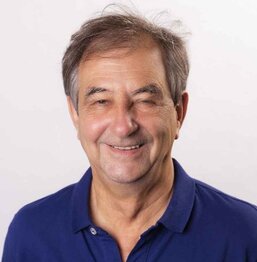
Enrique García-España
University of Valencia, Spain
Prof. García-España obtained his degree in Chemistry from the University of Valencia in June 1977. After working for a period in private industry, he obtained his PhD degree in 1984. Subsequently, he did his Postdoctoral stay at the University of Florence, between (1984-86). He obtained a position as Assistant Professor at the University of Valencia and became leader of the research group in Supramolecular Chemistry. Since November 2000 he has been full Professor of Inorganic Chemistry. His research interests include the design and synthesis of enzyme mimetics, preparation of probes for the recognition of species with environmental or biomedical relevance, modification of nanoparticles and development of new therapeutic agents. With an h-index of 48, he has co-authored >350 scientific publications accumulating over 9000 citations. In 2010 he was awarded the Inorganic Chemistry Prize of the Spanish Royal Society of Chemistry (RSEQ). He is also co-author of several patents.
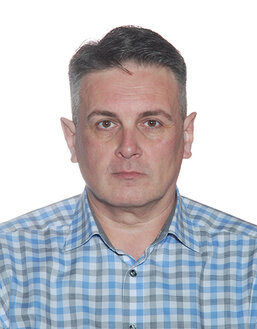
Slobodan Gadžurić
University of Novi Sad, Serbia
Prof. Slobodan Gadžurić, completed his BSc and MSc in Chemistry at the University of Novi Sad before earning a PhD in Chemistry from the Université de Provence in Marseille, France. His research work focuses on ionic liquids, novel electrolytes, and sustainable chemical processes. He leads research into the synthesis, characterization, toxicity, and application of ionic liquids, as well as the development of safer electrolyte systems and the investigation of molecular interactions in non-aqueous media. His work bridges analytical methodology with green chemistry principles, contributing to environmental and energy-related research challenges and he published more than 180 research articles in such fields. He is president of the Section for Analytical Chemistry of the Serbian Chemical Society and Chair of the IUPAC Subcommittee on Solubility and Equilibrium Data. He has coordinated numerous research projects and interdisciplinary collaborations, and his scientific achievements have been acknowledged with awards such as the IUPAC Franzosini Award.
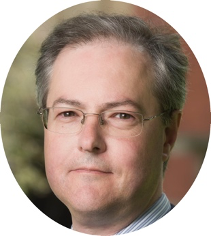
Michael Hannon
University of Birmingham, UK
Prof Mike Hannon develops and applies metallo-supramolecular design in bioinorganic chemistry to create new binders for unusual, non-canonical (non-duplex) DNA and RNA structures, and studies their effects on biological systems. He is Professor of Chemical Biology at the University of Birmingham, UK, a former president of the Society of Biological Inorganic Chemistry (SBIC) and Executive Secretary of the International Conferences on Coordination Chemistry (ICCC) series.
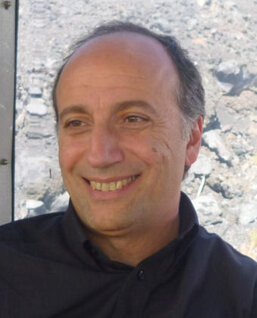
Roberto Paolesse
University of Rome “Tor Vergata”, Italy
Prof. Roberto Paolesse graduated cum laude in Chemistry from the University of Rome “La Sapienza” in 1983. He began his academic career at the University of Rome “Tor Vergata” in 1986 joining the Department of Chemical Science and Technologies as an Assistant Professor. He was appointed Associate Professor in 2001 and Full Professor of Chemistry in 2012 in the same department of which is currently serving as director and leader of the Sensors Group. His research spans several interconnected areas of chemistry, including the synthesis and reactivity of metal complexes of porphyrins and related macrocycles, the deposition of organic thin films, and the development of porphyrin-based chemical sensors. His interests also extend to the design and application of artificial sensorial systems, such as electronic noses and tongues, as well as the characterization and application of porphyrin supramolecular aggregates. Throughout his career, prof. Paolesse has played a leading role in numerous national and European research projects (eg the FET-OPEN project INITIO). He published >500 research articles with >16000citations and a h_index of 65. He is inventor of 6 patents, and the editor of two books.
KEYNOTE SPEAKERS
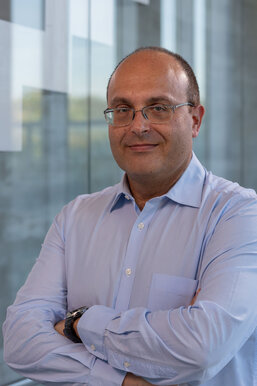
José Luis Barriada Pereira
University of A Coruña, Spain
Dr. José Luis Barriada Pereira completed his degree in Chemistry in 1995 and obtained his Ph.D. in 2000 from the University of A Coruña (Spain), where he focused on the influence of ionic strength on acid–base equilibria. In 2001 he moved to Plymouth (UK) for a Marie Curie postdoctoral fellowship to investigate the fate of silver in aquatic systems. He returned to the University of A Coruña in 2003 with an Isidro Parga Pondal research fellowship to continue studying adsorption equilibria using natural sorbents. In 2009 he became an Assistant Professor of Physical Chemistry at the University of A Coruña. In addition to his work on adsorption equilibria, Dr. Barriada has more recently resumed research on the acid–base equilibria of dissolved organic matter in natural waters. Since 2021 he has served as the coordinator of the METMED research group at the University of A Coruña. Beyond these research activities, Dr. Barriada has published ca. 60 scientific articles and regularly contributes to the peer‑review process for scientific journals. He has participated in several research projects and has served as principal investigator on three national projects. He has been Guest editor of two special issues at Nanomaterials and is co‑author of three book chapters. He has also taken part in numerous collaborative contracts with national and international companies.
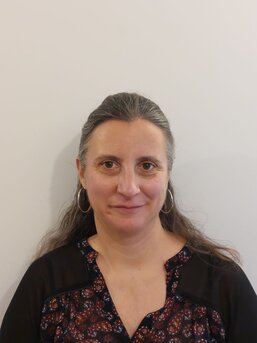
Célia Bonnet
CNRS Orléans, France
Dr. Célia Bonnet is a CNRS Research Director at the Centre de Biophysique Moléculaire (CBM, CNRS, Orléans), where she co-leads the Metal Complexes and MRI research team. Her research is centered on molecular and coordination chemistry applied to biomedical imaging, with particular emphasis on the design, synthesis, and characterization of responsive metal-based probes for magnetic resonance imaging (MRI). Her work aims to develop innovative contrast agents capable of responding to specific physiological parameters or biologically relevant metal ions, thereby enabling more precise and functional imaging strategies. Dr. Bonnet received her Ph.D. in physical chemistry from Université Joseph Fourier (Grenoble) in 2006. She subsequently carried out postdoctoral research at Trinity College Dublin and at the CBM in Orléans before joining CNRS as a permanent researcher in 2010. She obtained her habilitation to supervise research (HDR) from Université d’Orléans in 2018 and was promoted to Research Director in 2022. In addition to her scientific contributions, Dr. Bonnet is actively involved in research leadership, doctoral training, and scientific evaluation at the national and international levels. She has authored numerous peer-reviewed publications, book chapters and is a regular invited speaker at international conferences in the fields of chemistry and molecular imaging.
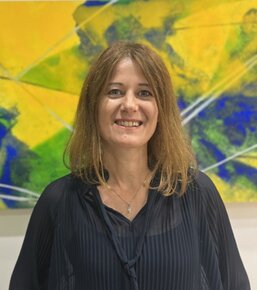
Dimitra Lambropoulou
Aristotle University of Thessaloniki
Dr. Dimitra Lambropoulou is Professor of Environmental Chemistry in the Environmental Pollution Control Laboratory, Department of Chemistry, Aristotle University of Thessaloniki (AUTh) and leader of the ENVIGREEN group of the Center for Interdisciplinary Research and Innovation (CIRI) of AUTh. Her main research interests focused on sample preparation /advanced mass spectrometry approaches in the field of environmental and food chemistry/ design and application of new materials in analytical and separation sciences / occurrence, transport, fate and effects of emerging contaminants, transformation products, micro & nanoplastics etc in the environment / identification and structure elucidation of organic contaminants by HRMS, application of “omics” techniques (Suspect Analysis & Non Target Analysis) to environmental problems / wastewater-based epidemiology / effective degradation and purification processes for the mineralization of organic micropollutants (i.e AOPs). Author of >260 papers (h-index 63, >13,000 citations), 2 books, and 18 chapters, she is Associate Editor for the journal Science of the Total Environment and editor for Total Environment Advances and Current Opinion in Environmental Science & Health
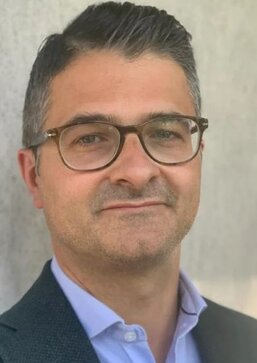
Fabio Piccinelli
University of Verona, Italy
Prof. Fabio Piccinelli is the head of the Luminescent Materials Laboratory at the University of Verona, where he has served as an Associate Professor since 2016. His academic roots trace back to the University of Bologna, where he completed his degree in Organic Chemistry (2002) and a Ph.D. in Chemical Science (2006).Prof. Piccinelli’s research focuses on the synthesis and structural characterization of inorganic and hybrid organic-inorganic materials, specifically those containing luminescent trivalent lanthanide ions. His current work addresses critical global challenges, ranging from medical innovation—developing curcumin-based rare-earth agents for theranostics—to environmental sustainability through eco-friendly rare earth recycling. With over 174 publications and an h-index of 38, his influence is recognized globally, further evidenced by his long-standing role on the editorial board of Scientific Reports (Nature Publishing Group).
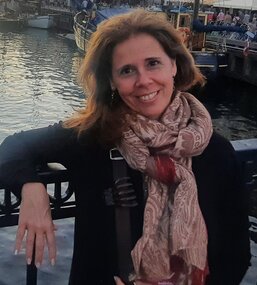
Laura Rodríguez
University of Barcelona, Spain
Prof. Laura Rodríguez completed her PhD in Chemistry at the Universitat de Barcelona (UB) in 2003, focusing on metallic clusters and supramolecular chemistry. Following a postdoctoral stay at Universidade Nova de Lisboa, where she acquired strong background on photophysics. Then, she returned to UB as faculty in 2008 and became Full Professor in 2020. Since 2015, she leads the Supra- and Nanostructured Systems (SUNS) group at UB. Her research emphasizes the interplay between molecular design, self-assembly, and photophysical properties in gold(I) and platinum(II) complexes with a clear connection between organometallic and supramolecular chemistry and luminescence. Important efforts are being made in order to bridge fundamental supramolecular chemistry and functional materials, with a strong emphasis on knowledge transfer and innovation. She has published over 140 peer-reviewed articles and led several national and European research projects as well as collaboration with companies. Prof. Rodríguez is currently the coordinator of the COST Action LUCES and an active member in several national and European networks. She has recently received the “Research Excellence” award from GEQO-RSEQ 2025.